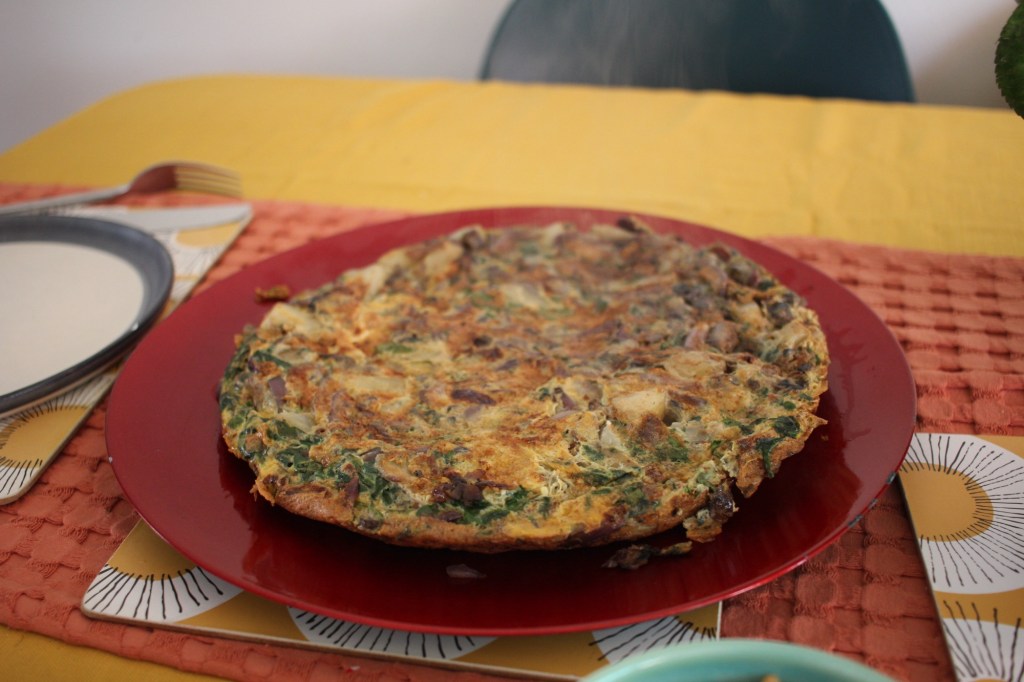
This weekend, I was browsing The Baking Book by Honey & Co., finding it both interesting and inspiring. I came across a recipe for something called maakouda, described as a traditional dish for Tunisian Jews. The recipe involves cooking potatoes and onions in a pot of oil, then pouring in eggs and placing the whole dish in the oven with a tray underneath to catch any oil overflow. Sarit and Itamar (authors of this recipe book) offer a lighter version of this dish. However, as I read the recipe, I couldn’t help but think I was looking at a spruced-up Spanish tortilla! Like a tortilla, this recipe includes potatoes, eggs, and the ever-controversial onions. But it also adds double cream, ras el hanout spice mix, capers, parsley, and pepper. The method involves boiling the potatoes, melting butter and oil together to fry the onions, then adding the potatoes for a bit more frying. The eggs are mixed with double cream, spices, capers, parsley, and black pepper, and this mixture is added to the potatoes and onions, then cooked by frying and flipping—just like a Spanish tortilla.
Wonderful!
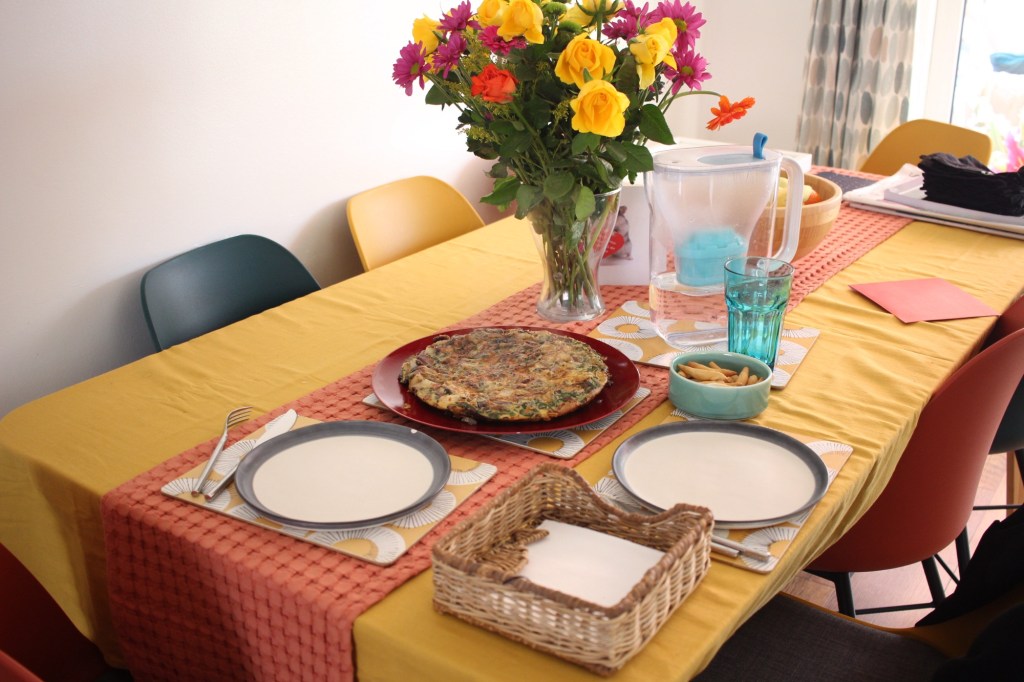
Inspired, I made my own version using what I had in the kitchen: frozen potatoes left over from Christmas, frozen spinach (I’m not sure how long they’ve been there 😺), mushrooms from this week’s shopping, ras el hanout, and some ground black pepper. The result was quite nice, and I was especially proud of successfully flipping the mixture without any mess or fuss.
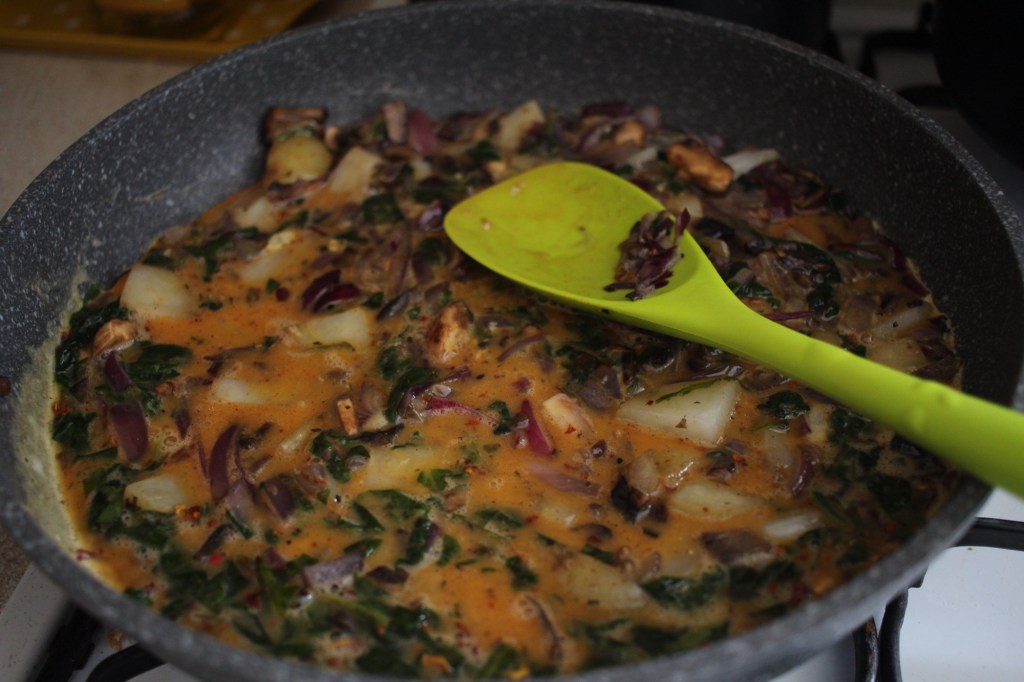
Out of curiosity, I Googled maakouda and found it described as a Moroccan potato cake made by mashing potatoes, mixing them with flour and herbs, shaping them into balls. Essentially deep-fried patties. The name maakouda comes from the Arabic word meaning ‘set’ or ‘bound,’ referring to the firm yet soft texture. This was quite different from both the recipe I read in the cookbook and the version I made. It struck me that my original encounter with this dish came from Israeli authors writing about Tunisian Jews. Further digging revealed that variations of potato maakouda are made by Sephardic Jews across Tunisia and Morocco. Some versions are shaped into round patties and deep-fried, while others, like the Tunisian recipe, are made into one large ‘cake’ and baked.
Seeing all these variations made me wonder about many things, including, what to call my own version. Over lunch, I joked with my husband (who is Spanish) that perhaps I should just call it an egg pie. So I have decided to call this one Francesca’s Egg, Potato, and Spinach Pie.I am always quite fascinated with what I find, once I go down the rabbit hole of searching for the origins and evolution of recipes. It quite the perfect mix of tradition, culture, opportunity, availability, innovation and creativity.
If you are interested in the original recipe from which I took my inspiration from:
Ingredients
2 potatoes, peeled and cut in 2cm dice (about 300g )
½ tsp + ½ tsp table salt
50g unsalted butter
1 tbsp olive oil
2 onions, peeled and sliced (about 200g )
8 eggs
100g/ml double cream
2 tsp ras el hanut spice mix
2 tbsp capers
1 small bunch of parsley, leaves picked and chopped
A pinch of freshly ground black pepper
Instructions
● Place the potatoes in a pan containing 500g/ml of water seasoned with the first half-teaspoon of salt. Boil for 5 minutes, then drain.
● Melt the butter and oil together in a good non-stick frying pan. Add the onions and fry on a medium heat until they soften entirely (this will take about 8-10 minutes). Now add the cooked diced potatoes and continue frying for a further 6-8 minutes. In the meantime whisk all the remaining ingredients together in a bowl.
● Increase the heat to high and pour in the egg mixture. Allow 1 minute for the eggs to start cooking around the rim, then use a heatproof spatula or wooden spoon to push the mixture from the sides into the centre, all around the pan. Leave to cook for another minute, then repeat.
●Now smooth the top and reduce the heat to low.
● Cover and cook for 2 minutes, then use the lid and pan combined to flip the maakouda. l Carefully slide it back into the pan to finish cooking on a low heat for 5 minutes before transferring to a plate to serve.
Reference: ‘The Baking Book’ by Honey & Co., pages 82 – 83.

